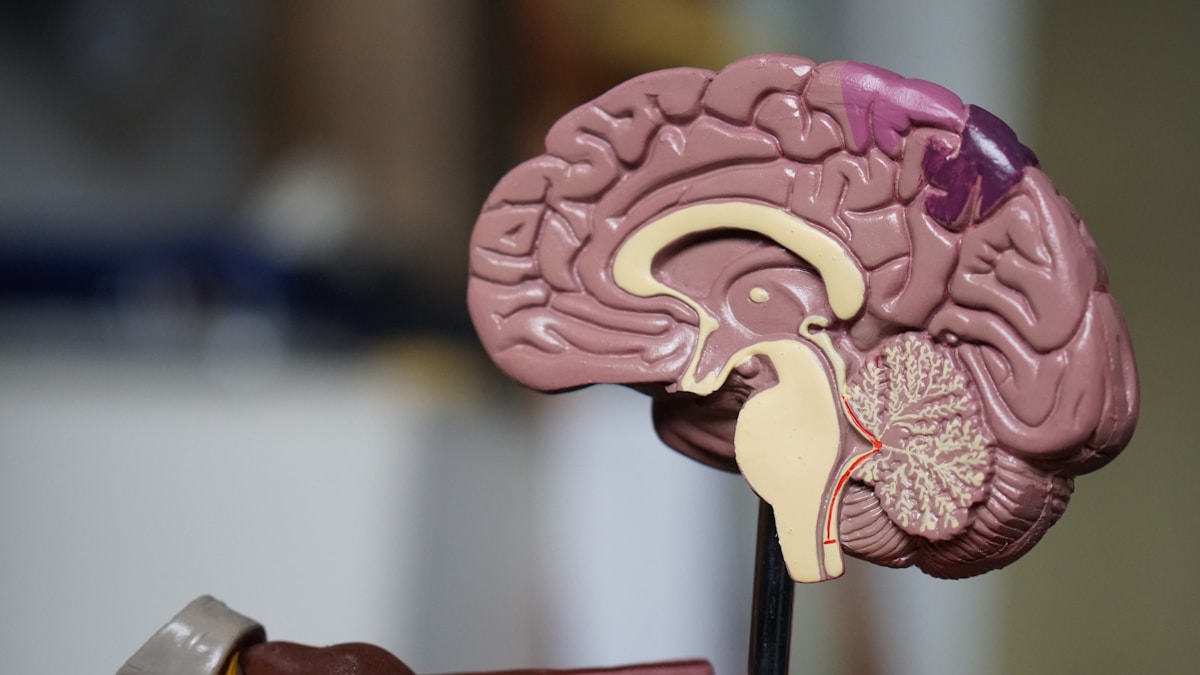
One of the most important things you can understand about your own mind is also one of the least widely known: your brain is not fixed. It was never fixed. From the first days of life until the last, the brain retains the capacity to reorganise itself — to form new connections, prune old ones, and fundamentally alter the architecture of how it processes experience.
This capacity is called neuroplasticity. And it is the biological foundation of everything we do at Neuro Alchemy Lab.
What Neuroplasticity Actually Means
Neuroplasticity refers to the brain's ability to change its structure and function in response to experience. It operates at multiple levels — from the formation of new synaptic connections between individual neurons, to the growth of new neural pathways, to large-scale reorganisation of how different brain regions communicate with each other.
For most of the twentieth century, the dominant view in neuroscience was that the brain was largely fixed by early adulthood — that the neural architecture laid down in childhood and adolescence was, for practical purposes, permanent. We now know this to be wrong.
Research across the last three decades has demonstrated that the adult brain retains significant plasticity throughout life. New neurons can be generated in certain brain regions — a process called neurogenesis. Existing synaptic connections can be strengthened, weakened, or eliminated based on patterns of use. The brain can, in measurable and documentable ways, physically change in response to new experience, learning, and therapeutic intervention.
This is not a metaphor for personal growth. It is a description of biological reality.
The Principle That Makes It Work
The most important principle underlying neuroplasticity was articulated by the neuropsychologist Donald Hebb in 1949, and remains foundational to the field: neurons that fire together, wire together.
What this means is that the strength of a neural connection is determined by how frequently and consistently it is activated. The more a particular pattern of neural firing is repeated — a thought, a response, a behaviour, an emotional reaction — the more efficiently that pattern runs. Over time, it becomes automatic. A default. Something that happens without deliberate initiation.
This is how habits form. It is also how trauma responses, anxiety loops, and relational patterns become entrenched. The brain is not malfunctioning when it runs these patterns. It is doing precisely what it was built to do: optimising for efficiency based on what has been practiced most.
The corollary — the part that makes neuroplasticity clinically meaningful — is that the reverse is also true. Patterns that are no longer activated weaken over time. And new patterns, consistently practiced under the right conditions, can become the new default.
What 'The Right Conditions' Actually Means
Neuroplasticity is not automatic. The brain changes in response to experience — but not all experience produces lasting change. The conditions under which neural reorganisation occurs matter enormously, and understanding them is central to understanding why some therapeutic approaches produce durable change and others do not.
The conditions that support neuroplasticity include:
Attention and presence — the brain changes most efficiently when attention is focused on the experience being processed. Distracted or dissociated engagement produces weaker neural encoding.
Emotional activation — moderate emotional arousal enhances neuroplasticity. This is why purely intellectual engagement with a pattern — understanding it conceptually without any felt sense — produces limited neural change. The nervous system must be involved, not only the thinking mind.
Repetition over time — single experiences, however powerful, rarely produce lasting neural reorganisation on their own. Change consolidates through repeated activation of the new pattern across multiple contexts and over sufficient time.
Safety — the nervous system reorganises most effectively in conditions of relative safety. Chronic high stress or threat actually inhibits neuroplasticity in certain brain regions, including the prefrontal cortex. This is why the therapeutic relationship — the quality of safety and attunement within the clinical space — is not incidental to the work. It is a neurobiological requirement.
Neuroplasticity and Trauma — A Critical Distinction
Trauma affects neuroplasticity in specific and significant ways that are worth understanding directly.
Traumatic experience — particularly repeated, early, or relationally embedded trauma — produces neural adaptations that are precisely designed to be durable. The brain encodes threat-relevant information with particular efficiency, because in conditions of genuine danger, forgetting a threat is potentially fatal. The result is that trauma responses — hypervigilance, avoidance, emotional reactivity, dissociation — are neurologically robust. They were built to last.
This does not mean they cannot change. It means that changing them requires working at the level where they are stored — the body and the nervous system — rather than only at the level of conscious understanding.
It also means that the healing process must be titrated carefully. Overwhelming the nervous system in the name of 'processing trauma' can retraumatise rather than heal — because a nervous system in extreme activation is not in the conditions that support neuroplasticity. The window of tolerance — the zone of activation within which new learning can occur — must be respected and worked with, not overridden.
For intergenerational and transgenerational trauma, the picture is more complex still. Epigenetic changes alter how the stress response system is calibrated at a biological level — and while these changes are themselves plastic and responsive to experience, they require a clinical approach that accounts for their depth and their origin.
How We Use This at NAL
Every aspect of the NAP-D Protocol is designed with the neuroscience of plasticity in mind.
The neural mapping that begins each clinical relationship is an attempt to locate precisely where in the nervous system the most significant patterns are operating — so that intervention can be targeted rather than generic.
The somatic dimension of the work engages the body directly, because lasting neural change requires reaching the subcortical systems where patterns are stored — systems that do not respond to language and reason alone.
The ethno-decolonial axis ensures that the cultural and historical context of the nervous system is accounted for — because a pattern that makes no sense without its context cannot be effectively changed without naming that context.
And the structure of the work — whether in individual sessions or the 8-Week Programme — is designed to provide the repetition, safety, and emotional engagement that neuroplasticity requires.
Change is not promised as an aspiration. It is engineered as a process.
"The patterns that hold you back are not who you are. They are what your brain learned to do, in a specific context, for specific reasons."
The single most important thing neuroplasticity tells us is this: the patterns that hold you back are not who you are. They are what your brain learned to do, in a specific context, for specific reasons.
And what the brain learned, under the right conditions, the brain can unlearn. Not perfectly, not painlessly, and not overnight. But measurably, durably, and with the kind of depth that holds six months, one year, ten years later.
That is what we are building toward — together.